The Hired Man, by Sandra Dallas
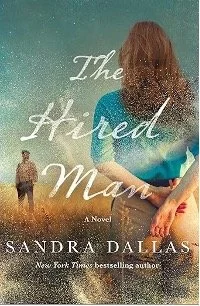
A thoughtful young woman navigates provincial prejudices during Dust Bowl times in Colorado.
In December of 2025 great waves of Arctic air swept down across the plains, threatening a hard permanence that one could easily fear would never depart. But memory of the year’s earlier spring brought hope to all except, perhaps, those with apocalyptic dispositions. Such hope was scarce during the Dust Bowl years, which kicked off in 1930. Memory of spring rain faded annually year after year, as one “boiling wall of grit” after another blew through southeastern Colorado. The dust storms were indistinguishable except for the color of the dirt that drifted against and through every structure, yellow from Kansas, brown from Oklahoma, and red from Texas. By 1937, hope was buried beneath these multicolored dunes.
The Hired Man is a story told by Martha Helen Kessler, a high school student struggling with her mother and father and younger brother, Henry, on a farm in Burke, Colorado during Dust Bowl times. After one storm Otis Hobbs, who Martha Helen fears is a tramp on account of his appearance, appears at the Kessler farmhouse carrying Kevin, a local boy lost during the latest dust storm and being searched for by the townspeople from Burke. While one would expect great relief at finding Kevin, what emerges immediately is suspicion, actually outright disdain, of Hobbs by Kevin’s family, who characterize him as a “bum.” Sheriff Gant then labels Hobbs as a hobo and a vagrant, telling him “you’ll have to move along,” or be arrested under the town’s vagrant law. At this point Ruth, Martha Helen’s mother, proclaims that the Kessler’s will hire Otis to work on the farm for food and lodging. And so begins the novel’s primary setting of small town provincialism exacerbated by the hard financial times arising out of the Dust Bowl environment.
Technically, Martha Helen’s story and the plot are presented by a first person narrative, commonly used in coming of age novels, a category into which The Hired Man certainly fits. The hard times are the backdrop for her personal confrontation with the world around her. The dust storms act as an accelerant for moral and social choices heaped upon Martha Helen, making her journey through adolescence into a sprint. While there is a plot, and many characters taking part in it, Martha Helen’s coming of age is not mysterious. She says it plainly at the end of the first chapter: “The Dust Bowl changed us. Mr. Hobbs did, too. During that time he lived with us, I grew up. I was barely more than a girl when he joined our family. By the time everything was over, I’d become a woman.”
As with all Sandra Dallas novels, the story is about the characters. And the plot is the plow that pushes their development forward. Hobbs is the novel’s antagonist, although the prejudices, bad deeds, and gossip displayed by the townspeople make a clear picture of him as difficult to see as a barn during a storm of swirling dirt. Unlike Martha Helen’s character, Otis is revealed to the reader only by exterior means: his arrival during a storm with a nearly dead boy; his mysterious past; his competence as a hired hand; and his ongoing presence being a focal point of town prejudice, the most notable being his arrest and trial for the murder of Frankie. At no point in the story is there any indication of a transformation for Hobbs. Martha Helen is the opposite. She undergoes moral learning, her experiences during the plot being ethically transformative. Hobb’s self at the end hasn’t changed.
Followers of Sandra Dallas will not be disappointed by The Hired Man. Her ability to deliver a character driven morality story amid hard times and social upheaval is again a showcase. Tension is high during a dynamic created by community instability and murderous wrongdoing. The end of the story may raise some eyebrows. But the heart of the story is pure Sandra Dallas.